 admin
adminThe Senegalese military oligopoly and the return of risk in Sierragambia
This is the title of this prospective analysis, which we begin with…
A critical fortnight in December 2026 for political and military security along the Senegambia – Sierragambie axis
What will remain, on the evening of 6 December 2026, of the political and military security architecture that Dakar has patiently woven around Casamance since the fall of Yahya Jammeh, and opportunely so, as a way of regaining control?
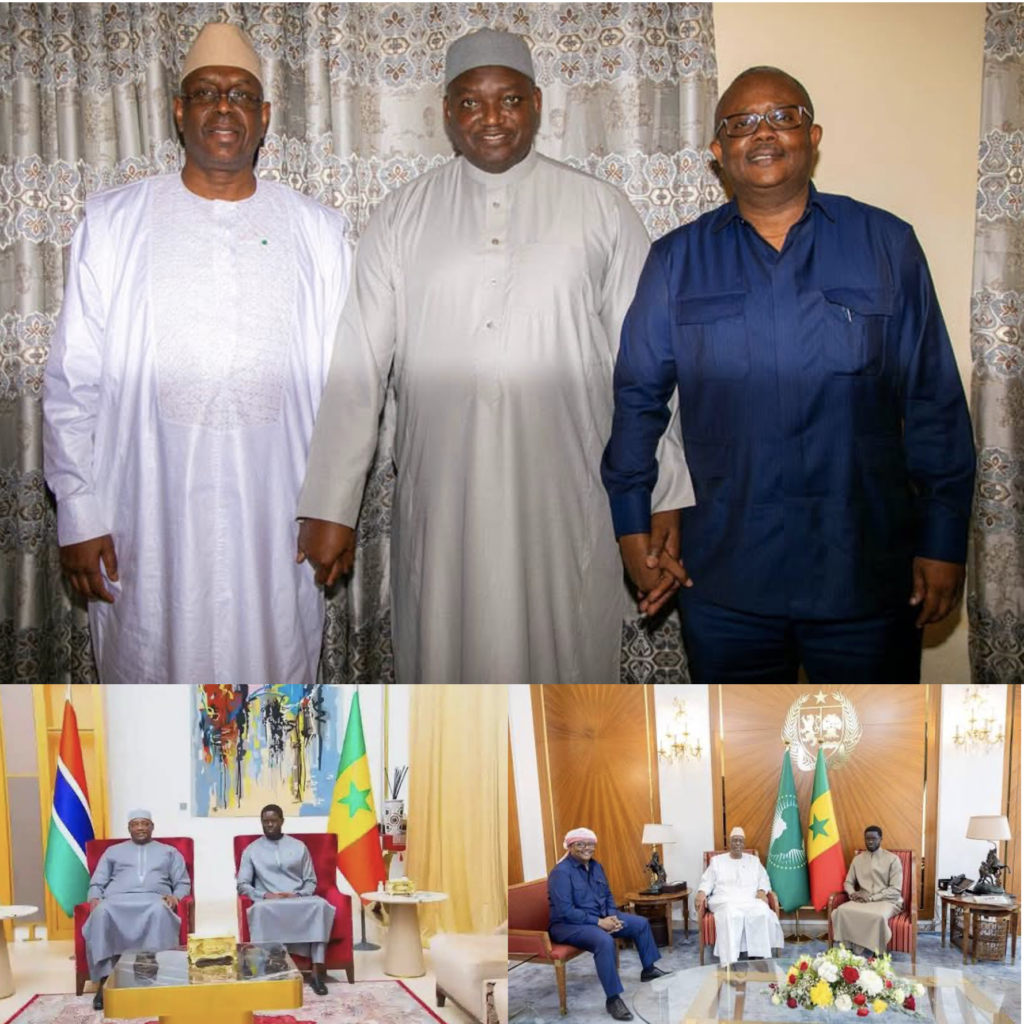
The question is far from rhetorical, for Sierragambie’s calendar packs into five days three deadlines, each of which, taken alone, would be cause for concern. To recall them: on 2 December, the Senegalese president, who launched a new party, “Kiiraay: Les Patriotes républicains” (The Republican Patriots), in July 2026, regains the constitutional power to dissolve a National Assembly dominated by Ousmane Sonko’s Pastef, the party that brought him to power. On 5 December, The Gambia holds a presidential election in which Adama Barrow is seeking a third term. Barrow founded the National People’s Party (NPP) in December 2019 after leaving the United Democratic Party (UDP), which had got him elected head of state in 2016 as part of a coalition. On 6 December, Guinea-Bissau holds general elections intended to close the military transition that began on 26 November 2025. They take place under a new Constitution, with a declared candidate who is still abroad: Umaro Sissoco Embaló, the president who was defeated at the polls but overthrown before the results were proclaimed. Only the decision of the coup leaders will confirm or refute whether his departure was merely a ruse.
Never since 2017 have the three capitals of the Senegambia – Sierragambie axis been held in suspense by uncertainty at the same time. This synchronisation, as we shall show, puts to the test what we propose to call the Senegalese military oligopoly. By this we mean a position in which Senegal (alongside Nigeria and Ghana, within the ECOWAS framework) provides its two neighbours with a decisive share of their military security, at the expense of democracy, and in return gains control over its immediate environment. This control has produced real stability, but it is a stability of dependence, not a stability of institutions. It holds only as long as neighbouring regimes stay aligned with the type of regime in Dakar and, not being democratic, it also runs a serious risk of unravelling the moment one of them falters.
You will understand that we are seeking from the outset to argue that this architecture is not merely a matter of security. It is also political, in the most Senegalese sense of the word: it has served, and still serves, ruling elites who find in it the means to lie to the people and to preach values they do not respect. These elites betray the hopes placed in speeches that cease to bind them once in power, and they will do everything to hold on to that power for as long as possible, even if it means resorting to security-driven militarism.
Three trajectories have shaped this architecture. The first is that of Macky Sall, who left power only after lengthy prevarication and political violence that led to a delayed election, having even threatened to hand that same power over to other forces. The second is that of Adama Barrow, who went back on his commitment to be a transitional president and was able to rely on the ECOWAS military presence to stay in power through security propaganda. The third is that of Umaro Sissoco Embaló, the very man who had put forward the idea of an anti-coup force, but who later organised elections he seemed about to lose, before a coup d’état occurred that many observers suspected him of instigating. Together, these trajectories outline less a security cooperation between states than a survival coalition between regimes.
Our aim here, extending our analytical framework of “Sierragambian models of power consolidation”, is to historicise this configuration rather than comment on it, and then to draw from it scenarios and areas of vigilance.
One conviction runs through this exercise, and it is best stated at the outset: democracy is built in assemblies and on the trust of citizens, never in barracks, and it is by this yardstick that the choices of the three capitals will be judged. Casamance, because it is at once the heart of the Sierragambian axis and its Senegambian blind spot, will be the first ground to register the shocks if the system cracks. For it is here, in the Ajamaat Country, that distrust of corrupt adventitious systems, and the redistribution of roles, take root.