 admin
adminA Survival Architecture: Security in the Service of Longevity
Update note (12 October 2026). Written on 5 October, this analysis has been revised and consolidated, from this section through to the conclusion, in light of developments in Guinea-Bissau between 28 September and 9 October 2026, including the announcement of Umaro Sissoco Embaló’s return, the refusal issued by the Military High Command, the disarmament of the presidential guard, and the acknowledgement, made on 8 October by the National Electoral Commission and the transitional Prime Minister, that the elections scheduled for 6 December could not be held on that date, an assessment to which Dakar, acting as ECOWAS mediator, responded the same day through an official communiqué. The introduction and the first two sections have remained unchanged, as the five-day timetable they describe lost its third milestone in practice without weakening the argument, subsequent developments instead reinforcing the central thesis. The new passages remain strictly confined to facts established by the cited sources; rumours and interpretations are identified as such.
What has united Dakar, Banjul, and Bissau since 2017 is not merely the desire to contain the Casamance insurgencies. It is also a shared difficulty among leaders in relinquishing power according to the rules they themselves proclaimed. The military oligopoly is the external face of this reality: it protects states, but it also protects, and sometimes primarily protects, regimes.
The Senegalese case provides the model. For months, Macky Sall maintained uncertainty over a possible third candidacy, still postponing his answer in June 2023 until after Tabaski, saying that he needed to allow Senegalese citizens “time to enjoy their meat.” He announced that he would not seek re-election only on 3 July 2023, after a month of June during which the repression of demonstrations following Ousmane Sonko’s conviction resulted in at least twenty-three deaths according to El Hadj Souleymane Gassama, adding to the thirteen deaths recorded in March 2021. On 3 February 2024, only three weeks before the election, he revoked the decree convening the electorate, a decision described by the opposition and civil society as a “constitutional coup d’état.” Only the intervention of the Constitutional Council ensured that the election ultimately took place on 24 March 2024. During this crisis, as noted elsewhere, references to “other forces” ready to take over in the event of a vacuum cast the shadow of non-electoral arbitration over the electoral contest.
In The Gambia, Adama Barrow came to power in 2016 through a coalition that expected a transitional mandate and a constitutional reform limiting presidential terms. He sought and obtained a second term in 2021; after term-limitation projects failed in 2020 and again due to the lack of support from his own party, he is now seeking a third term, one that the 1997 Constitution permits but that his commitments of 2016 had ruled out. ECOMIG, deployed to guarantee the transfer of power between Yahya Jammeh and Barrow, remained throughout this period the life insurance policy of his presidency.
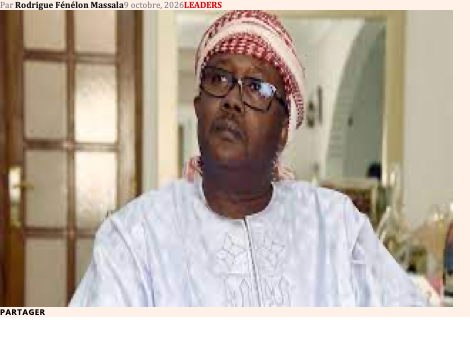
In Guinea-Bissau, Umaro Sissoco Embaló organized the presidential and legislative elections of November 2025. On the eve of the announcement of provisional results, however, the army seized power and suspended the process while opposition candidate Fernando Dias claimed victory. Jeune Afrique reports that many observers suspected Embaló of orchestrating the alleged coup in order to halt a process he appeared likely to lose, suspicion strengthened by the fact that General Horta N’Tam, appointed head of the transition, was widely regarded as a close ally. Evacuated by Dakar under ECOWAS auspices and exiled to Morocco, Embaló announced on 28 September 2026 that he would return to Bissau on 4 October and stand in a presidential election now governed by a constitution that significantly expands presidential powers. The sequence appeared remarkably coherent: a lost election transformed into a military transition, and the military transition becoming the stepping stone to a return fortified by stronger institutional powers.
It is precisely this coherence that the first week of October disrupted. In a communiqué issued on 1 October, the Military High Command for the Restoration of National Security and Public Order stated that security conditions did not permit guarantees for the former president’s return, while also reaffirming restrictions on demonstrations and political gatherings. Consequently, the announced return on 4 October did not occur. General N’Tam subsequently called on 7 October for members of the presidential guard, reputedly close to Embaló, to “voluntarily surrender their weapons,” while several government officials were replaced and all holders of firearms were instructed to hand them over to the authorities. Whatever the truth behind suspicions surrounding November 2025, the lesson lies elsewhere. A survival coalition that entrusts the military with managing succession may discover that the arbitrator, once installed, survives the very person it was meant to serve, with the transition ceasing to be a platform for return and becoming instead an instrument of confiscation.
Three trajectories, one common lesson, now reinforced by developments in Guinea-Bissau. In post-2017 Senegambia, longevity in power is negotiated less before voters than within palace circles and under the protection of armed forces, some of which are foreign to the countries they secure. These forces, whether national or foreign, may at any moment cease to be instruments of longevity and become its holders. This is the dimension that diplomatic circles discreetly describe as stability.
The Senegalese Military Oligopoly: Shared Security, Contested Influence
To speak of an oligopoly rather than a hegemony is to acknowledge a fact often obscured by the rhetoric of “regional power”: Senegal does not secure its neighbours alone. It shares this function with a small number of ECOWAS militaries. While it is the only provider possessing both a common border and a vital interest in Casamance, it nevertheless operates under the watch of regional patrons and shadowy transnational actors. The security supply is shared; the interests involved are asymmetrical.
In The Gambia, the ECOWAS Mission (ECOMIG), deployed in January 2017 to guarantee the transfer of power between Jammeh and Barrow, numbers approximately 500 personnel according to the Africa Center for Strategic Studies. On 9 September 2026, Vice-President Muhammed B.S. Jallow informed Gambian deputies that the mission comprises Senegalese, Nigerian, and Gambian contingents under ECOWAS command, that it does not operate under a bilateral agreement with Dakar, and that its presence has no fixed end date, with ECOWAS reassessing its necessity annually. Nearly ten years after its arrival, a force initially conceived for a transition has become a permanent component of Gambian security architecture.
In Guinea-Bissau, the ECOWAS Stabilisation Support Mission (ESSMGB) includes Nigerian, Senegalese, and Ghanaian contingents. According to Le Pays of Ouagadougou, its continuation following the 26 November 2025 takeover was secured through dialogue led by Senegalese Minister of the Armed Forces General Birame Diop, culminating in February 2026 in the release of opposition figures and the formation of an enlarged transitional government. In August 2026, the ECOWAS representative in Bissau requested that contingent commanders orient their preparations toward supporting Bissau-Guinean forces during the referendum and general elections.
This arrangement places Dakar in a unique position. Senegal simultaneously holds the rotating presidency of ECOWAS, entrusted to President Bassirou Diomaye Faye, and serves as the organisation’s mediator in Guinea-Bissau. This dual status was reiterated in the communiqué issued on 8 October 2026 by Senegal’s Ministry of African Integration, Foreign Affairs, and Senegalese Abroad. Acknowledging the “legal, technical and institutional constraints” invoked by the transitional authorities, Dakar stated that “any modification of the electoral timetable must be conducted through a consensual, inclusive and transparent process, accompanied by clear guarantees regarding the completion of the transition as soon as possible.” The communiqué further judged it necessary to “lift restrictions on political and civil activities” and urged all parties, “including military officials,” to exercise restraint. Embaló was not mentioned by name. The silence reveals the mediator’s discomfort, compelled to demand political opening from a junta it helped stabilise while its former protégé remains excluded from the process, unable either to defend him without appearing partisan or abandon him without appearing disloyal. The provider of security thus finds itself accountable for a transition whose timetable it no longer controls.
Yet this architecture suffers from an asymmetric condominium with Abuja. While Dakar contributes geographical proximity and political mediation, Nigeria remains the financial engine and principal military force of the organisation. Indeed, the ESSMGB is commanded by Nigerian Brigadier General Danjuma Ribah Dantani. For Abuja, these missions are a way of reaffirming regional leadership in the face of the Alliance of Sahel States. Political paralysis in Dakar could therefore encourage Nigeria to exert even greater influence over the political direction of these missions, depriving Senegal of its principal external lever of influence. Senegal’s current ECOWAS presidency temporarily mitigates this asymmetry politically, but it does not alter the fact that military command remains Nigerian, nor the risk that prolonged mediation efforts in Bissau could ultimately return control to Abuja.
In Casamance, a recent development also deserves attention. General Souleymane Kandé, former commander of Military Zone No. 5 in Ziguinchor and coordinator of special operations from July 2023 onward, whose name remains associated with dismantling MFDC bases, had been transferred in 2024 as defence attaché in New Delhi. In September 2026, however, he was appointed Director General of External Intelligence (DGRE), an institution attached to the Presidency of the Republic. The appointment of an officer shaped by the Casamance theatre to lead external intelligence, at a moment when one neighbour is entering a presidential campaign and the other is experiencing a prolonged military transition, indicates clearly that Dakar views Casamance first as a matter of regional security and only secondarily as a domestic political issue.
This configuration possesses its own doctrine, articulated long before its practical implementation. As early as 2012, Babacar Justin Ndiaye argued that geography creates a threshold beyond which military build-ups and alliances in Banjul or Bissau become a casus belli for Senegal, recalling Operation Fodé Kaba 2 in The Gambia (1981) and Operation Gabou in Guinea-Bissau (1998). In 2017, Yoro Dia gave the doctrine its formula: “armed teranga,” a combination of soft power and hard power. The oligopoly is the institutional expression of this doctrine: Dakar provides security and harvests influence, a relationship that has elsewhere been described as a form of diplomatic clientelism intended to secure the immediate neighbourhood.
The Gambian scholar Hassoum Ceesay extends this interpretation. He sees the interventions of 1980-1981 and 1998 as expressions of a “propensity for military intervention” underpinning Senegal’s regional image as the “big brother.” He raises a question that, he notes, no researcher had yet explored: did the 1998 intervention seek to preserve Vieira in exchange for political, military, or economic concessions, “in the same way as The Gambia in 1981”?
This is precisely the logic of the survival coalition: Dakar’s military support has always been accompanied by the political alignment of the supported regime. Ceesay also reminds us that mediation has never been Dakar’s exclusive preserve. In 1998, Yahya Jammeh, because neither Senegal nor Guinea could be considered neutral, brought Vieira and Mané to the negotiating table, while simultaneously hosting in Banjul the talks between Dakar and the MFDC that led to the January 1999 agreement. Operation Gabou, costly in human losses and accused of widespread looting, also fuelled opposition within Senegal and contributed to the political dynamics that culminated in the alternation of power in 2000.