 admin
adminContinuation 1 of our prospective analysis
The Senegalese military oligopoly and the return of risk in Sierragambie
——-
The axis that today structures Senegal’s neighbourhood diplomacy has a longer history than the Senegalese state itself. Caroline Roussy recalls that in the early 1960s, Casamance elites drew closer to Dawda Jawara, who had been sidelined from the Gambian colonial government between his resignation in 1961 and the PPP’s victory in 1962. This rapprochement took shape around a plan for an alternative territory that revived the empire of Gabou (Kaabu), that area of Mandinkaisation, and which was referred to as the “3B project”: Banjul, Bignona, Bissau.
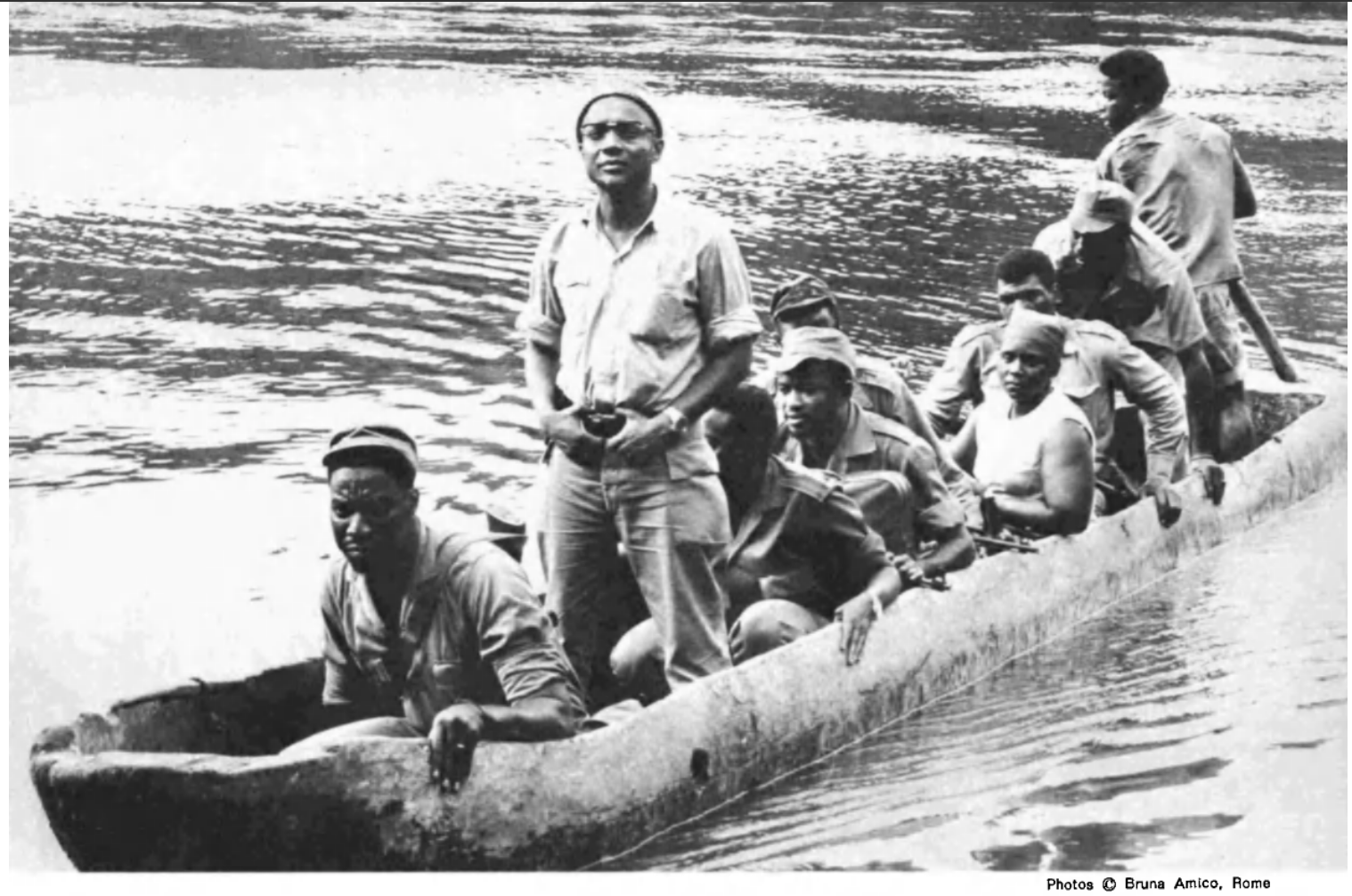
Despite the collapse of the Mali Federation, followed by that of the Dia-Senghor partnership; despite fears that The Gambia might be used to obstruct the smooth running of Senghor’s Senegal; despite the Guinea-Bissau war of independence, in which Ajamaat populations took up arms alongside the leader Abel Djassi (Amílcar Cabral), whose adopted name invited a certain identity-based solidarity; the “3B” most likely never found any popular expression in postcolonial Senegalese Casamance. This was especially so after Senghor had succeeded in neutralising the political leaders of the MFDC, whose regionalism, evident from very early on, might have encouraged such a political outlook.
It was therefore no more than an idea carried by elites seeking to express a local subnational unity, backed by a Mandinka imperial reference. That reference resonated more strongly in the PPP’s Protectorate base and in the Islamised Fogni Kombo than in the Fogni of Ahoune Sané, the political stronghold of Émile Badiane’s MFDC. Badiane, already an ally of Senghor, promoted the myth of the Aguène-Diambone kinship, which symbolically linked Casamance to Senegal through cultural policy. Senghor’s Senegal thus helped strengthen a sense of identity among the Ajamaat, turning their homeland into the last bastion of resistance against adventitious ideologies.
Depending on the uses to which it was put, the “3B” formula subsequently took on successive meanings, since ideas often enjoy a lifespan and a maturation period longer than those of the elites and political movements that carry them. Such is the way a people’s historical consciousness advances: like the chameleon, it takes on the forms of its time the better to pursue its inexorable course…
One episode deserves to be recalled, so clearly does it illuminate the historical ambiguities of this question. In 1981, Senegal’s military intervention in The Gambia against the coup attempt led by Kukoi Samba Sanyang, known as Operation Fodé Kaba II, restored President Dawda Jawara to power and paved the way for the Senegambia Confederation established the following year.
Even if it is difficult to claim that Kukoi Sanyang or his supporters explicitly championed the “3B” idea, one fact, established through our fieldwork, remains particularly revealing. After the defeat, several elements linked to the movement found refuge in the Casamance-Guinea-Bissau area, that is, precisely in the social and historical corridor that would later underpin various cross-border political imaginaries. In this sense, the 1981 Senegalese intervention can be read in retrospect as an operation already aimed at preventing the emergence of a regional political reconfiguration beyond the control of postcolonial states.
In an irony of history, the crushing of a challenge to the Senegambian order helped push its actors towards the very space where the idea of a historical community linking The Gambia, Casamance and Guinea-Bissau would later crystallise. In other words, even before the “3B” formula was taken up again by certain political circles in Casamance, the Senegalese state was already fighting, without necessarily naming it, any dynamic likely to favour the reconstitution of a regional entity reminiscent of the old Gabou.
In the 1990s, as our fieldwork attests, the external wing of the MFDC, through Mamadou Nkrumah Sané, openly spoke of the goal of forming a Gabou. This came at the very moment when the 1998-1999 Bissau-Guinean civil war saw elements of the Southern Front fighting alongside Ansumane Mané against João Bernardo Vieira, whose regime was backed by the Senegalese army.
As the political scientist Babacar Justin Ndiaye often points out, this formula speaks volumes about the deep political ambitions running through Senegambia. It also reveals the conviction, shared by some elites, that the ties linking The Gambia, Casamance and Guinea-Bissau are older and denser than those binding them to contemporary state constructions.
Yet the reference to Gabou was not confined to discourse. At the same time, it surfaced indirectly in the strategic concerns of a Senegalese state confronted with the growing regionalisation of the Casamance question. What had until then belonged to the longue durée and to political imaginaries gradually took the shape of a regional security issue, in which the future of Casamance was being decided as much in Banjul and Bissau as in Dakar.
Operation Gabou, launched in June 1998, is a particularly revealing sequence in this respect. Officially intended to support João Bernardo Vieira’s regime against the mutiny led by Ansumane Mané, it also took place against the backdrop of accusations of arms trafficking between certain Bissau-Guinean military officers and MFDC fighters.
For several years, Guinea-Bissau had become one of the strategic depths of the Casamance conflict, to the point that political developments in Bissau now appeared to Dakar as a matter of national security. The various actors involved in the fighting around Bissau (the Brá military camp, Bissau-Bissalanca airport, also known as Osvaldo Vieira International Airport) showed, moreover, how closely the stakes of the Bissau-Guinean war and those of the Casamance conflict were intertwined.
The historical irony of this sequence nonetheless deserves emphasis. The intervention bore the very name “Gabou”, that of the ancient Senegambian polity whose memory still runs through the historical representations linking The Gambia, Casamance and Guinea-Bissau. Without claiming that the operation explicitly sought to combat any “3B” project, it nevertheless contributed to preserving the territorial order inherited from decolonisation against cross-border dynamics perceived as potentially destabilising. The Senegalese state thus found itself in the paradoxical position of symbolically invoking the name of Gabou at the very moment it was seeking to prevent any regional reconfiguration that might escape the framework of existing states.
Seen in retrospect, the succession of Operations Fodé Kaba I (1980) and II (1981) in The Gambia and Gabou in Guinea-Bissau already traces the geopolitical perimeter of what would, several decades later, become the Dakar-Banjul-Bissau axis. There is, incidentally, another militaristic irony behind the first name, given that Ahoune Sané, the undisputed and indisputable hero of Greater Fogni, was the chief adversary of that violent anti-hero from Bundu. In both cases, Senegal intervenes in the states that frame Casamance; in both cases, the stability of those states is presented as a condition for the stability of the southern region; and in both cases, the Casamance question forms the strategic backdrop to Senegalese action. Long before its contemporary diplomatic formalisation, the political architecture of today’s DBB axis could already be glimpsed in the external interventions through which Dakar sought to stabilise its immediate regional environment.
In the late 1990s and during the first decade of the 2000s, the failure of Senegal’s politico-military approach, initiated under President Abdou Diouf, which held that the regimes in Bissau had to be supported militarily in order to better fight the MFDC, made it easier, rightly or wrongly, to place The Gambia within the “3B” imaginary.
But in 2016-2017, in the aftermath of Yahya Jammeh’s fall, the expression resurfaced in the writing of journalist Yoro Dia, then an adviser to President Macky Sall, though with its meaning reversed. The Banjul-Bignona-Bissau axis, he wrote, had been “the MFDC’s dream” and should now become Senegal’s, in the form of a zone of “economic co-prosperity for the South”. Even in the event of a Senegalese reappropriation, the formula still refers to this idea of a southern bloc…
What has emerged instead since 2017, and the installation of Adama Barrow under ECOMIG protection, is a Macky Sall-Barrow-Embaló triangle, which, through a transfer of purpose, has become the Diomaye-Barrow-Embaló triangle. The way Umaro Sissoco Embaló came to power in February 2020, sworn in amid an electoral dispute with Dakar’s strong backing, confirms that this was indeed a political strategy sponsored by Macky Sall. This triangle has turned into a form of “politicking prosperity”: a security architecture among capitals serving unacknowledged political designs, chief among them preventing the return of the “3B” imaginary, often associated with populations of Ajamaat culture.
In other words, this trajectory can be summed up as the substitution of a single letter, which is anything but trivial: Banjul-Bignona-Bissau became Dakar-Banjul-Bissau. The B of Bignona gave way to the D of Dakar. Put differently, an imaginary carried from Casamance, albeit by elites, was converted into a state security doctrine in which Casamance is no longer an actor but a file.
Jean-Claude Marut drew the political conclusion as early as 2021. In his view, once The Gambia and Guinea-Bissau had become Dakar’s allies, the Senegalese state had little remaining interest in negotiating with a weakened rebellion, even though the conflict could re-emerge on other grounds, notably over land, mining or forestry.
The DBB axis, the axis of capitals inherited from colonisation, is nonetheless superimposed on an axis of societies that it does not fully control and whose deep history it largely ignores. Toby Green recalls, in the introduction to the volume he co-edited with Patrick Chabal, that Casamance and present-day Guinea-Bissau long formed a single cultural space. He also notes that part of the problems linked to the Casamance rebellion, as well as to Bissau-Guinean instability, lies in the persistent porosity of a border crisscrossed by kinship ties. Casamance fighters withdrew into the forested areas of northern Guinea-Bissau during the 1980s and 1990s, just as Casamance communities had earlier supported the PAIGC guerrilla in the 1960s and 1970s. The former bases of Guinea-Bissau’s independence struggle were thus reoccupied by MFDC fighters.
The independence of Guinea-Bissau and Cape Verde mobilised a significant part of the Ajamaat Country at a time when Senegal feared that this independence (and the very method of struggle, even though the PAIGC claimed it had been forced into it) might give Casamance ideas. Is it mere coincidence that Amílcar Cabral chose the name Abel Djassi, a surname deeply rooted in the Ajamaat world of “Greater Fogni”? When we speak of “Greater Fogni”, we are indeed putting forward the hypothesis that nothing fundamentally distinguishes the Fogni of The Gambia from the Fogni of Casamance. This remark is above all a reminder that the movement of people precedes that of doctrines and of the political constructions inherited from the colonial order. It is also a reminder that, even at the level of relations between states, a politico-moral debt still exists between Guinea-Bissau, The Gambia and the populations of Casamance.
Finally, reducing this new “Dakar-Banjul-Bissau” or “Diomaye-Barrow-Embaló” axis to a mere security doctrine would be to overlook its most constant function. Beyond its security dimension, it is also an architecture of political survival.
To be continued…
French…
Portuguese…